Have Camera Will Travel Headline Animator

Have Camera Will Travel

22 January 2013

Ms Sandiford to be executed for drug trafficking.

A British grandmother has been sentenced to death by firing squad for smuggling almost 5kg of cocaine into Bali.

Lindsay Sandiford was arrested in May last year after she tried to enter the Indonesian holiday island with illegal drugs worth £1.6 million hidden in her suitcase.

Local prosecutors had called for the 56-year-old housewife to be jailed for 15 years. But today there were gasps in the Bali courtroom when a panel of judges announced Ms Sandiford would be executed for drug trafficking.

As the shock verdict was announced, Ms Sandiford, from Gloucestershire, slumped back in her chair in tears before hiding her face with a brown sarong as she was led out of the courtroom.

27 August 2012

OwnFone: A Custom-Printed Phone Perfect for Seniors and Kids

Some people need all the latest apps and features available on their smartphone so they can be connected 24/7, while others just want to make a phone call. For the connected crowd, read all the latest reviews onMashable. For the others, check out the OwnFone.

It’s designed to call only the people you want to reach most frequently. In fact, it can only hold 12 contacts. There are no keys or buttons to program. Instead you let OwnFone know who you want to add, and they program and send you a custom-printed phone, about the size of a credit card.

If you lose it, they just print you a new one. You do need to call OwnFone support if you need to change someone’s number, or add a contact.


OwnFone says it plans to come out with a phone that can be customized in braille in the near future. Right now OwnFone is only available in the UK.

Check out the video above for more details and let us know what you think of a printed, pre-programmed cell phone.

26 August 2012

Estepona Wild Fires rage on a 2km front

Police and Ambulances hurried to evacuate as wild fires quickly spread our reporter on the scene photographer the devastation


Estepona on Fire

We had a tiny little fire today, which they put out.

Then an hour later, it restarted, and spread along 2 Klm of the coast.

It was horrible seeing old people being run out of their homes, and carried through the smoke by police and ambulances.

The pictures really doesn,t do show bad it really was.many houses have gone


25 August 2012

During experiments on the axons of the Woods Hole squid (loligo pealei), we tested our cockroach leg stimulus protocol on the squid's chromatophores.


 The results were both interesting and beautiful. The video is a view through an 8x microscope zoomed in on the dorsal side of the caudal fin of the squid. We used a suction electrode to stimulate the fin nerve. Chromatophores are pigmeted cells that come in 3 colors: Brown, Red, and Yellow. Each chromatophore is lined with up to 16 muscles that contract to reveal their color.

Paloma T. Gonzalez-Bellido of Roger Hanlon's Lab in the Marine Resource Center of the Marine Biological Labs helped us with the preparation. You can read their latest paper at:http://rspb.royalsocietypublishing.org/content/early/2012/08/13/rspb.2012.1374

14 August 2012

London's secret music venue and their livestream act

boiler-room-ch1.jpg

With an invite-only door policy and super secret location, Boiler Room is London's most exclusive music venue. But elitism isn't the premise for its clandestine nature—in fact, anyone with an Internet connection can easily join in the fun. Using a simple webcam, the crew behind Boiler Room livestreams each set for the world to see free of charge, and each month more than a million viewers tune in to see performances by artists like James Blake, The xx, Roots Manuva, Neon Indian, Juan Maclean and more.

boiler-room-ch2.jpg

We recently chilled out to the smooth sounds of Brooklyn's How To Dress Well before rocking out to revered musician Matthew Dear, who brought down the house with an intense 40-minute DJ set. Keep an eye out for our interview with Dear, but for now you can get a little more insight into the underground music scene's most talked about livestream show by checking out our interview with assistant musical programmer and Boiler Room host Nic Tasker.

boiler-room-ch3.jpg
How important is it for Boiler Room to remain secret, at least in its location?

That is quite an important aspect of it, purely because it means when you do shows you don't get a lot of groupies, pretty much everyone in the room is either a friend of ours or one of the artist's. It helps to create a more relaxed atmosphere for the artist and I think they feel less pressure. They're also just able to chill out and be themselves more rather than having people being like, "Hi can I get your autograph?" If the artists are relaxed usually you get the best music.

It seems like there is more interaction among the crowd than at a typical venue, is that intentional?

It's definitely a social place. All the people that come down, most of them we know and they're all our friends. So they come down, hang, have a drink and just chill out, basically. From our very set-up, we do it with a webcam, we're not a highly professional organization but I think that's kind of the charm of it. The main thing is people come down with the right attitude.

boiler-room-ch4.jpg
How much of the show is prescribed?

I guess that depends on the artist. We never say anything. Literally, whatever they want to do—we're kind of the platform for them to do whatever they want, so if Matthew Dear wants to come and play an hour of noise with no beats, he can do that. That's fine with us, and I think that's why artists like coming to play for us. We're not like a club where you have to make people dance, we don't give a shit if people dance. It's nice if they do and it makes it more fun, but some nights you just get people appreciating the music, which is equally fun.

boiler-room-ch5.jpg
Is there a particular kind of artist you guys look for and ask to come perform?

No, not particularly, it's just whatever we're feeling. Thristian [Boiler Room's co-founder] has the main say on musical direction, but it's a massive team effort. In London there's five of us, New York there's two, LA there's one and Berlin there's two.

Tonight you had different set-ups for each artist, do you tailor their positioning in the room to their style?

It definitely depends on the act and what kind of music they do. With live bands we found what works nicely is having them opposite each other because it's like they're in rehearsal, like they're just jamming. Which is again trying to give them that chilled out feel that they're just at home jamming and there happens to be a camera there. For some of our shows we've had over 100,000 viewers. When you think of those numbers it's quite scary, but when you're in the room and it's all friends it creates that vibe that people don't mind. You can imagine if you had all those people in front of you it would be a very different situation.

boiler-room-ch7.jpg
Have you ever thought of Boiler Room as an East London version of Soul Train?

It's never crossed my mind like that, but I can see why you think that. I like to think of us as the new music broadcaster, kind of the new MTV, but obviously we operate in the underground scene mainly. But I like to think that what we do is as revolutionary as what they were doing. We're always growing into something new.

boiler-room-ch6.jpg
What's up next for Boiler Room?

We have had visual people in doing 3D mapping, and that's something we're looking forward to progressing—doing more with the visuals. We've got the upstairs as well, we're starting to do breakfast shows with some high profile DJs, we're going to be doing that regularly. Each will have an individual format. The next step is progressing the US shows, we're alternating weekly between New York and LA, so the next step is to take Boiler Room to America

13 August 2012

Breaking Free of the Co-dependency Trap presents a groundbreaking developmental road map to guide readers away from their co-dependent behaviors and toward a life of wholeness and fulfillment.

Breaking Free of the Co-dependency Trap presents a groundbreaking developmental road map to guide readers away from their co-dependent behaviors and toward a life of wholeness and fulfillment.UK Citizens

This is the book that offers a different perspective on codependency and is strongly recommended by Dream Warrior Recovery as part of a solution based recovery. This bestselling book, now in a revised edition, radically challenges the prevailing medical definition of co-dependency as a permanent, progressive, and incurable addiction. Rather, the authors identify it as the result of developmental traumas that interfered with the infant-parent bonding relationship during the first year of life.US Citizens

Drawing on decades of clinical experience, Barry and Janae Weinhold correlate the developmental causes of co-dependency with relationship problems later in life, such as establishing and maintaining boundaries, clinging and dependent behaviors, people pleasing, and difficulty achieving success in the world. Then they focus on healing co-dependency, providing compelling case histories and practical activities to help readers heal early trauma and transform themselves and their primary relationships.

12 August 2012

Vintage Ads Most Disturbing Household Products


All of the following ads are real and unaltered, so don't blame us. We weren't there when they were made, and in some cases the entire insane thought process that went into creating them has been lost to history. Maybe they made perfect sense at the time?

Maybe. But it's really hard to see how even our parents and grandparents didn't get nightmares from ...

#13. Three-Legged Dingo Boots

vintageadbrowser.com

The Message:

Here are some boots that you should buy, because famous people wear them. Three of them.

The Horror:

Wait, what?

Yes, amazingly, the fact that this ad stars a pre-murder O.J. Simpson is the second-creepiest thing about it. And you can squint and try to read the text all you want -- it makes no reference whatsoever to the fact that their spokesperson has three legs. There's no cute slogan like "Boots so comfortable, you'll wish you had another foot!" Nope. It's like some guy in the art department just said, "Eh, I don't like how you can't really see the chair, let's just add another leg to fill that space."

We know what you're thinking: "Cracked, this is obviously a subtle 'big dick' joke. 'Third leg?' Get it?" But, no, it turns out this was a whole campaign they did with various celebrities, some of whom are women:

eBay
Like, uh ... this famous lady right here.

But O.J. seems to be the most frequent star of the "Third Leg" campaign, which apparently lasted for years. Note how his afro shrinks as he gets more comfortable with his new appendage:


The picture in that third ad would have been perfect for the cover of his book.

Please don't blame us for the inevitable nightmare in which O.J. is running after you, in the dark, those three boots pounding down the pavement after you with a noise like a wounded horse.

#12. Lord West Suits Will Impress Your 7-Year-Old Date

vintageadbrowser.com
"I like my women like I like my code names: 007."

The Message:

Women of all ages dig men in tuxedos!

The Horror:

According to the text, this dinner suit is for "sophisticated traditionalists," a euphemism we weren't previously aware of for "child molesters." Because there's no other way to interpret this picture. That's not tenderness on their faces. That's hunger. If you told us that they're a father and daughter, that would only make it creepier.

And it turns out that this is only the worst example in a whole series of ads associating little girls with selling tuxedos.

eBay
The style is best described as Godfather meets Lolita.

Can you imagine the pitch meeting that led to this campaign? Picture Don Draper from Mad Men standing before his clients, selling them on this idea:

"Class. Elegance. Making out with little girls. These are the values your company represents."

"Did ... did you say 'making out with little girls,' Don?"

"Yes," replied Don with perfect confidence.

"OK, just making sure."

Sitting at the end of the table, Peggy looks at Don and smiles. He did it again.

#11. Man in Tuxedo Carefully Considers Naked Child

library.duke.edu
"Told you it was bigger. Now pay up."

The Message:

Regular soap sinks in the bathtub, causing children to take longer in washing themselves and their fathers to get angry and spank them. Prevent child abuse by buying Ivory Soap -- it floats.

The Horror:

OK, they're clearly just fucking with us at this point. Remove the text and the message becomes clear: "In the old days, child predators used to dress way better than they do now." But let's put the pedophilia overtones aside for the moment and examine the text.

Was the elaborate scenario described under the picture (involving childhoods ruined by non-floating soap) really such a common problem in the '20s, or was this based on the painful personal experiences of whoever commissioned this ad? We're betting on the latter option. Note that the father's body language doesn't say "I'm going to spank you" -- he's clearly pondering which part of the kid's body to break first.


"Maybe the 28th trimester isn't too late for an abortion."

#10. "Are You Sure I'll Still Be a Virgin?"

thesocietypages.org
"If you didn't think band camp counted, I don't see why you'd think this would."

The Message:

Don't worry, teens, you can use Tampax tampons without losing your virginity.

The Horror:

Be honest: How many of you looked at this picture and immediately recognized it as a Tampax ad? And how many looked at it and thought it depicted a teenage girl being sexually propositioned? It's not just us, is it?

This ad would have looked 90 percent less sordid if both people involved were clearly visible. Instead, the second teenager is for some reason sitting on the floor of the porch with her back to us, so we can't see how young, or scared, she is. But, of course, all of that is purely from our own depraved imagination. The real ad is simply about two teenagers debating whether or not inserting a tampon counts as sex.

#9. Escaped Convicts Love Revell Authentic Model Kits

vintageadbrowser.com
"Is this the new plan, boss?"
"I've spent all day plotting against Superman; this is 'Lex Time'."

The Message:

Hey kids! Check out these sweet model kits!

The Horror:

There's only one possible scenario in which this picture could have come to exist: The photographers were getting ready to shoot this ad when they realized that the boy who was supposed to be holding up the models in the picture never showed up for work. Panicking, the man from the ad agency looked around the studio.

"Dmitri, can you come here for a second?" he said to the guy who fixes the lighting. "Stand here and hold this model. Yes, that's great. You'll play the boy in this ad."

"But sir," said the photographer, "Dmitri was just released from jail. In fact, he's still wearing the prison jumpsuit."

"No, no, he's perfect. Look at him. Look at that childlike innocence in his face."


"Could you open the top button maybe, show a little chest hair?"

"Perfect."

#8. Our Competitors = Surgical Ass Torture

vintageadbrowser.com
"Don't worry, sir, the gloves are just to establish atmosphere."

The Message:

Using cheap toilet paper can lead to medical complications.

The Horror:

... which in turn can lead to rubber-gloved hands inserting clamps in your anus. Better play it safe and go with Scott Tissues.

This attempt to traumatize customers into buying their product with threats of anal torture was part of a whole marketing campaign created during the Great Depression in which Scott Tissues' slogan went from "Wipe your butt with us" to "Wipe your butt with us, or die in a world of asshole pain."

Of course, it was all bullshit: There's no such thing as "toilet tissue illness," it was just a thing they made up to convince people to keep buying tissues at a time when they were lucky enough if they had a toilet.

#7. "Before You Scold Me, Mom ... Maybe You'd Better Light Up a Marlboro"

deceptology.com

The Message:

Before you beat your baby for stealing your favorite hat, have a cigarette and relax yourself. Then beat the baby.

The Horror:

How many times did this months-old child have to be punched before it learned to pick up the Marlboros and offer them to mommy to calm her down? If that's not the saddest thing you've imagined all week, you're dead inside. This is actually one in a series of ads from the '50s, back when Marlboro was targeting mommies instead of rugged cowboys. Sometimes the babies actually seem to be guilting their moms into smoking more.

tobacco.stanford.edu
"You turned me into an addict when I was a fetus, now deal with it."

Oddly enough, the version of this ad aimed at fathers doesn't involve scolding, but a pompous baby in a basket defending daddy's rather feminine cigarette tastes (note the reference to "beauty tips" at the bottom).

tobacco.stanford.edu
This is the kind of debate babies have all the time.


26 July 2012

Paper Passion, a scent from Geza Schoen for Wallpaper magazine, makes its wearers smell like freshly printed books

Paper Passion, a scent from Geza Schoen for Wallpaper* magazine, makes its wearers smell like freshly printed books. I suppose it can be alternated with "In the Library," a perfume that smells like old books.

Paper Passion fragrance by Geza Schoen, Gerhard Steidl, and Wallpaper* magazine, with packaging by Karl Lagerfeld and Steidl.

“The smell of a freshly printed book is the best smell in the world.” Karl Lagerfeld. 

It comes packaged with inside a hollow carved out of a book with "texts" by "Karl Lagerfeld, Günter Grass, Geza Schoen and Tony Chambers."

18 July 2012

HANGING OUT WITH FRIENDS TODAY


Grabbing a cup of coffee
Description: Description: CF576CE06B56479DB8C5A48E42CA3BA9@HomeLT
  
Dining out at your favourite restaurant
Description: Description: 6903A9CEDEC24FE2BF0AD08A8938A39D@HomeLT
 
Spending some time at the museum
  Description: Description: 810C23D4F768471C975BAA3637C7E2F9@HomeLT
 
Meeting at a popular fast food centre 
Description: Description:   654B37223ED04EBEB25DD4F27DB38B76@HomeLT   
 
Relaxing at the beach
Description: Description: 3662D65E36084FE3B1DFB412B2301360@HomeLT   
Going to a game
 
Description: Description: 86E35EEDDDD8402D90B4DE9C978CB4BF@HomeLT 
 
   Going out on a date
Description: Description: E2E7E88F4CF34955A4CAA39B6C207ED2@HomeLT   
 
Taking a drive around town
Description: Description:   A68911474C964512942A7E70D8E5B158@HomeLT
  
I am thankful I belong to another generation  !!!!
 
“It’s become appallingly clear that our Technology has surpassed our Humanity” -- Albert Einstein

13 July 2012

Tattoos are permanent reminders of temporary feelings

Tattoo
'It's wisest to pick someone whom you cannot break up with or divorce.' Photograph: Gary Powell/Getty Images

Tattoos are permanent reminders of temporary feelings – at least if you believe the report in Thursday's Daily Mail, which looked at "embarrassing" matching couple tattoos – designs that complement or complete each other across two, romantically involved bodies.

Yet there are millions of people who feel no embarrassment about the tattoos they share with their friends, lovers and even exes. Moreover, as with most perceived "new trends" in tattooing, this practice is one with a history far older than the current generation; it's a phenomenon that provides both an insight into human beings' fundamental relationships with their own bodies and the bodies and lives of those close to them.


Tattoos have been used as markers of association for probably as long as human beings have walked the earth, to mark tribal affiliations, regimental membership in the military, membership of fraternal orders such as the masons or US college Greek letter groups, and to signify gang membership.

The most common of these types of affiliative tattoos, though, is marking an attachment to a loved one. There's an old adage in tattooed circles that suggests getting your lover's name tattooed on you is a sure kiss of death for that relationship, and it's an old gag too: Norman Rockwell's famous 1944 Saturday Evening Post cover painting, The Tattooist, shows a salty sailor in the tattooist's chair, having yet another name added to an arm already full of the crossed-out names of past paramours. Even earlier, a cartoon in Punch from 1916 shows a "fickle young thing" – a well-turned-out young woman, as it happens – revisiting her tattooist to seek an amendment to the ornamental crest tattoo on her arm as she has, euphemistically, "exchanged into another regiment".


None of this seems to have affected the long-standing popularity of having names or symbols tattooed to commemorate couples' love and bond. Magazines in the 1920s reported the latest fad for newlyweds was getting matching tattooed wedding rings; preserved tattooed skins in the Wellcome Collection from the late 19th century feature names and portraits of lovers; studies of tattoos in the American navy in the 18th century reveal a large percentage of seamen of the period bore tattoos of the names of women; even Christian pilgrims in the 16th century were recorded to have borne the names of their wives on their skins, as tokens or identificatory marks; and records attest to romantic tattooing even in ancient Rome – St Basil the Great (329-380) is said to have condemned the tattooing of a lover's name that he observed on someone's hand. While I'd certainly never advocate getting a permanent mark of your relationship too hastily, it does seem that the instinct to inscribe a permanent token transcends the ages. Caveat amator.


Single tattoos that span multiple bodies appear to be a more recent phenomenon, however. In 1977, New York-based tattoo artist Spider Webb undertook what was probably the first conceptual art project to use tattooing, in a piece called X-1000, in which he tattooed single, small Xs on to 999 individuals, and, as a culmination, one large X on the final, 1,000th skin, conceived as one contiguous work. This tattoo, potentially spanning thousands of miles at any one time, was, Webb said, "the largest tattoo ever done at any point in history". In 2000, as the culmination to a performance art project begun in 1998 designed to highlight the horrific lives and plights of the homeless and hungry in Mexico City, Santiago Sierra produced his piece 160cm Line Tattooed on Four People, a single black line tattooed across the backs of prostitutes in exchange for wraps of heroin, as a symbol of their desperation, interdependence, and utter powerlessness. Sierra would later remark: "You could make this tattooed line a kilometre long, using thousands and thousands of willing people." In 2003, author Shelley Jackson famously published her short story Skin on the bodies of 2095, one tattooed word per person. These tattoos bring together strangers in common cause.


My favourite set of matching tattoos, though, are probably the ongoing collection of work worn by twins Caleb and Jordan Kilby, tattooed with matching work by influential and extraordinarily talented New York-based artist Thomas Hooper. If you must get matching tattoos with someone, it's wisest to pick someone whom you cannot break up with or divorce, and to get the work carried out by a tattoo artist who will produce a piece of work that will stand the test of time on its own terms.

Latvian company creates leather bound Ferrari


Motors News

We're familiar with seeing tight leather on smoking hot women, and weird old men, but it's a first for us seeing a leather bound Ferrari F430.

There seems to be a lot of fuss over this leather bound Ferrari F430 in the UK with both The Sun and The Daily Mail reporting about it recently.

However, this isn’t a new car by any means as US motoring blog Jalopnikreported on the F430 way back in August last year. It’s a pretty cool, albeit manky, car so we thought we’d show you anyway.

It’s the work of a Latvian custom car company called Dartz who hit the headlines in 2009 when they created a $1.5 million ruby red SUV with whale foreskin-covered seats. Yes, foreskin…

Anyway, some high roller with more cash then sense decided it would be a great idea to cover his €170,000 Ferrari in dark leather.

The owner of Dartz, Leonard Yankelovich, said: "One of our very rich customers from the Cote d'Azur wanted a leather exterior and knew we could deliver.

"It took three of my staff 16 working days to apply the leather and finish. He was more than happy when he picked it up."

He won’t be too happy when he scratches it though.

Is this the most expensive way to ruin a Ferrari?

11 July 2012

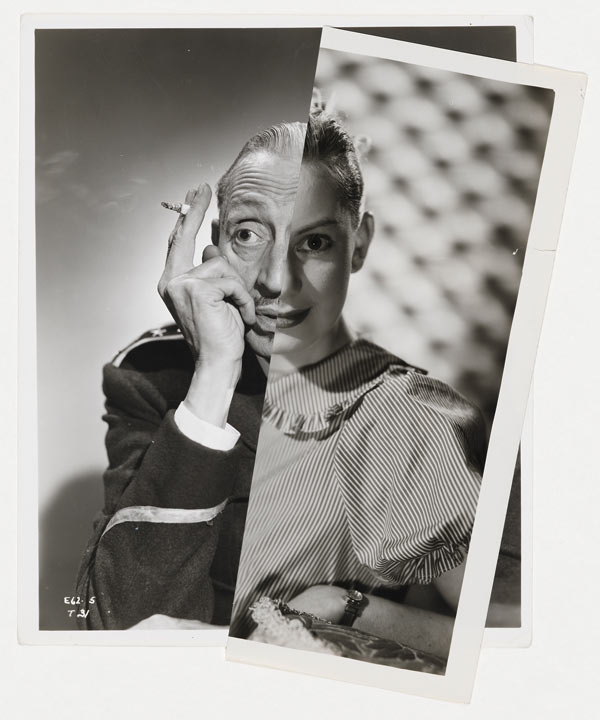
The Deutsche Börse photography prize exhibition has always presented a roving eye across different kinds of photography and photographic images.

Muse by John StezakerView larger picture
A detail from Muse (Film Portrait Collage) XVIII (2012) by John Stezaker, shortlisted for the Deutsche Börse photography prize. Click for full picture. Photograph: Alex Delfanne/Courtesy of the artist and The Approach, London

The South African photographer Pieter Hugo's images of the human and animal inhabitants of the Agbogbloshie, in Ghana's capital Accra, present a record of a dismal work and an appalling place. With its hellish fires and acres of dead computers, its wandering cattle and scavenging inhabitants, Agbogbloshie is a rubbish dump and reclamation site for defunct electronic goods. A girl in a tatty white dress and a bowl on her head poses amidst the smoking landscape. A cow sits before a broken keyboard. A young man, with a nest of scrabbly wiring on his head and an old tire over his shoulder, might almost be modelling a piece of mad millinery. It is all horribly photogenic. Well aware that many other photographers and writers have been here before him, Hugo still succumbs to the same photojournalistic cliches his work tries to escape.

The Deutsche Börse photography prize
  1. The Photographers' Gallery, London
  2. 13 July – 9 September 2012

However delicate her arrays of small images I feel much the same about the Japanese photographer Rinko Kawauchi's images, hung in clusters and groupings and runs of images. A web of crochet-work, a pallid spider, a full moon. Here are some tadpoles, and there they go again, wriggling their amphibian tails across a video screen inset in the wall among the still images. After the tadpoles, fireworks, exploding with that same wriggly rhythm. Some images are blown up big: light catching a motorcycle side-mirror, a tiny green frog sitting on someone's hand, a baby suckling at a breast. Wolfgang Tillmans, who uses similar methods of juxtaposition, scale jumps and leaps of subject matter, is better.

The American Christopher Williams shows just three largish photographs: a sumptuous, carefully composed shot of green and red developing trays in a photo-lab still life; a finger pressing a button on some kind of photographic flash machine; a tubular bale of hay in a field, shot in black and white. I'm as aware of the long intervals of white wall Williams has put between his images as I am of the pictures themselves. It all looks deeply meaningful, portentous and clever, but is somehow academic and feels dead. Maybe it's meant to.

John Stezaker's work is also photography about photography. He doesn't even take the photos himself. But Stezaker is by miles the best image-maker here. He has that great unteachable gift: an eye and a sensibility. Splicing old Hollywood publicity shots, marrying male and female faces, or – by an apparently simple act of gluing – sticking an old postcard over half a woman's face, he creates marvellous, funny, disturbing androgynies and what appear to be psychological crises in his subject's faces. No matter how long you look at them, Stezaker's hand-cut collaged images never lose their strange dynamism. A number of tiny, singular greyed details, cut from the incidental backgrounds of larger images in a 1920 compendium called Countries of the World, show single men and women walking and standing at kerbs and beside railings. A man and his shadow take a walk. Tiny figures cross a square. These miniscule details, smaller than stamps, ache with their frozen, fleeting human presences. Space and time collapse as you stare, nose to the glass. Another man stops and turns on a country road, as though disturbed by our looking. These people probably never knew that their passing had been recorded. Stezaker's 3rd Person Archive, this collection of hundreds of such image-fragments, is one of photography's great lost and found works, a major work masquerading as an archival curiosity. Photographer or not, he alone deserves the prize.

It sells out in days, is read in 45 countries and has been called the world's hippest interiors magazine.

Omar Sosa, left, and Nacho Alegre
Apartamento magazine's Omar Sosa, left, and Nacho Alegre

 Media news might be dominated by the decline of print, but Apartamento is quietly bucking the trend. Back in April, its founders, Nacho Alegre and Omar Sosa, celebrated as they sold all 25,000 copies of its ninth issue. The biannual, English-language publication was started in Barcelona from a tiny room in Alegre's house, yet now hits newsstands in China, Lebanon and Kenya, as well as recording big sales in Berlin, London and New York. One London shop reported selling 140 copies, compared to the 15 or so copies the rest of the magazines it stocks usually sell.

Unlike many traditional interiors magazines, which feature cold, minimalist rooms full of unaffordable designer gadgets, the living spaces in Apartamento are often small, cluttered and have a lived-in feel. The people covered are largely creative types – photographers, artists, musicians – who are invited to talk about their living spaces.

Apartamento magazineMedia news might be dominated by the decline of print sales, but for the past four years Apartamento has been quietly bucking the trend

These spaces are often rented, with family members, dirty laundry and used crockery all starring in photoshoots. Past features have included everything from tips for rooftop gardens and salad recipes to stories of nightmare roommates and a love letter fromChloë Sevigny to her New York apartment.

"It's not about design and products. We're not design fetishists," said Alegre. "The idea is about how people live in their homes and being able to tell their amazing stories. It's more like a diary."

Alegre and Sosa came up with the idea based partly on Alegre's experiences sleeping on friends' couches as he travelled across Europe as a photographer. It was originally planned to be a book before the pair hit upon the idea of an interiors magazine with a twist. The first issue, in April 2008, was funded entirely by the pair and quickly sold out its print run of 5,000. The money meant they could upscale in time for the third issue and recruit more people, such as Milan journalist Marco Velardi. There are currently seven full-time staff, aged between 24 and 32, and it has started to expand into a creative agency with footholds in New York and Milan as well as its HQ in Barcelona.

Apartamento's first issue featured cult filmmaker Mike Mills and indie band Mystery Jets, sourced through their network of work contacts and friends. Since then names as diverse as Swedish artist Carl Johan De Geer and former REM frontman Michael Stipe have featured, although even these are rarely contacted through traditional press avenues. "We're friends with Michael Stipe's boyfriend, who is a really good photographer," says Alegre. "You get a nice result that way, but it's not possible with everyone. We'd like to feature David Hockney but it's hard when you don't know anyone."

This naive approach gives the magazine much of its charm. Yet there are other reasons that account for its impressive sales figures. Apartamento does not run trade news and refuses to run articles that sell products for fear it will corrupt the spirit of the magazine. It charges a high cover price of €12 (£9.50), bucking the trend to go free and rely on advertising, which is minimal. Apartamento is also distributed directly to shops – concept stores and bookshops as well as newsstands – giving more control and a bigger slice of profits. Its chief operations officer, Victor Abellan, believes that the distribution network is in keeping with the magazine's ethos: "Speaking directly to stores gives us an emotional link between the reader, the retailer and the magazine."

. Rather, the whole thing has a strong human aspect, linking homes to the people who live in them rather than the items contained within. As designer Andy Beach says in issue seven: "A real living space is made from living, not decorating. A bored materialist can't understand that a house has to become a home."

Jeremy Leslie, magazine designer and founder of the blogmagculture.com, said Apartamento has several unique aspects. "Most of their articles lead with the name of the person rather than the solutions-based '10 ways to improve your storage' routine of other magazines," he says. He says its design has also helped it stand out, with high pagination and single columns of text lending it a bookish air. Its founders may not be "design fetishists", but Apartamento is held in high esteem in the design world – in 2010 it won the Yellow Pencil award for the best magazine.

Leslie's view that the decline of print does not mean that great magazine ideas can't take off is backed up by statistics such as an April study byDeloitte that found 88% of UK magazine readers still chose print as their preferred method of reading articles, with 35% subscribing to at least one printed magazine in 2011.

There are parallels with Apartamento's rise and how Vice magazineturned the style magazine on its head by targeting a different kind of reader to more traditional magazines. Although Alegre says Apartamento is not meant as a reaction to interior design magazines such as wallpaper*, it has clearly tapped into an area of home life and creativity previously under-served by such publications. Already there are plans to upscale Apartamento's circulation until it hits a "steady state" of 80,000 copies. However, Alegre is adamant that what is most important is retaining the magazine's spirit. . "It could get massive with us doing advertorials and running pieces about how nice companies are and how ecological their wood is," he said. "But we don't care about making lots of money from doing things the wrong way – we'd sooner not have to compromise."

series of hyper-realistic images entitled 'bodybuilder's world'. the personal project

belgian photographer kurt stallaert has conceived a series of hyper-realistic images entitled 'bodybuilder's world'. the personal project 
suggests an imaginary world with a literal 'powerful twist'. at first glance the subjects look ordinary in their daily surroundings, 
but on closer inspection they have been augmented to look like avid members of the professional fitness sport. the faces of the individuals, 
often those of children, are attached to the superhuman trunk of a bodybuilder generating a peculiar sense of curiosity, particularly 
within the everyday life setting. 


the faces of children are attached to those of bodybuilders


the subjects are often within an everyday life setting


artists have shown us how to look past the rain and see its beauty.

.
Rock stars … Jonathan Jones inspects the prehistoric ‘land art’ in Avebury. Photograph: Felix Clay for the Guardian

A giant rock rises up out of the field, a ragged, jagged colossus unmoved by the wind and driving rain. Further along the path looms another, then another, then another, all arranged in a curving line that vanishes behind a church tower and a barn. Meanwhile, on a patch of grass, two massive, lozenge-shaped stones stand tall in front of the Red Lion pub. Everywhere you look, in fact, there are eerie, unexplained slabs – jutting into what ought to be just another charming Wiltshire village.

The three stone circles of Avebury are a masterpiece of land art. That term is more often used to describe 20th-century works, the sort that reside in craters or sit by lakes in the American west. Yet when you look at, say, Robert Smithson's Spiral Jetty, the curling pier made of rocks and earth he built in Utah's Great Salt Lake in 1970, it is clearly inspired by the henges of prehistoric Britain. Avebury is one of the most haunting of these monuments. Although it was created 5,000 to 4,500 years ago, by people who left no writing of any kind to explain their intentions, it seems likely the stones and ditches that pepper Avebury had a religious purpose: they were meant to commemorate ancestors, to commune with the dead. As you walk around these immense, twisted stones, faces and agonised figures seem to rise to the surface.

Inside Kettle’s Yard gallery in Cambridge. Inside Kettle’s Yard gallery in Cambridge. Photograph: Paul Allitt

Modern artists in far-flung places have taken inspiration from Britain's prehistoric wonders for a good reason: Avebury's stone circles have shaped this landscape with a sublime and mysterious power that has endured down the ages. But what makes them art? And what makes them British? These are questions I'll be asking myself over the coming months, in a new series for guardian.co.uk: every day, I'll try to tell the story of British art, one image, object or structure at a time. And I've started by visiting Avebury, York Minster and Kettle's Yard gallery in Cambridge – all homes to great British art, from the prehistoric, medieval and modern periods.

What connects these places? Is there a common theme? British art really just means art made on these isles, but the moment you scratch at its "Britishness" you find multiculturalism is nothing new. From Avebury, I travelled north (and forwards a few thousand years) to York Minster, where some of the best-preserved stained glass in Britain creates a spectacle of colour that changes as daylight waxes and wanes. As I wandered through the hushed interior, sunlight struck one window, sending a stream of deep reds and blues across the stonework. It was a moment of pure ethereal beauty, a medieval light show that has lost none of its power.

York Minster's Five Sisters windowYork Minster's Five Sisters window

One tall window looked as if its images had melted away, damaged perhaps in one of the fires that have ravaged York Minster. But on closer inspection, the blue-grey glass of the towering Five Sisters Window is patterned in an elaborately geometric manner; it seems almost computer-generated. Surely these designs were influenced by the Islamic tiles British knights off on crusades in the east would have seen? This 13th-century window rejects figurative fuss in favour of pure mathematics and subtle, suggestive shades of colour. What, in theory, could be more British than York Minster? And yet the influence of Islam glows in its most impressive window.

The truth is that, for most of its history, British art was not self-consciously British at all. Islamic influences aside, the medieval art on these isles is deeply shaped by France, Europe's cultural leader in the middle ages. Before heading for Cambridge, I took a detour into the 18th century to explore the emergence of a more patriotic style. At Chatsworth House in Derbyshire hangs Thomas Gainsborough's Portrait of Georgiana, Duchess of Devonshire, her beauty caught in a rapidly painted swirl of hair and silks. This was once the most expensivepainting in the world, financier JP Morgan having paid $150,000 for it in 1901.

This is what many people mean by truly British art: a tremendous Gainsborough portrait of a posh person. It reflects the fact that, in the 18th century, some artists began to define themselves as British in style and attitude. The first to aggressively promote himself this way was William Hogarth, who mocks the scrawny French in his 1748 painting O the Roast Beef of Old England. In the art of Gainsborough, and even more so in the work of Constable and Turner in the Regency period, you can practically smell the countryside, hear the rain, taste the ale.

Critics have traditionally seen such paintings as the essence of British art. But, while I love these artists, their work is just one strand among many that have shaped our history. You only have to walk out of Chatsworth House into its gardens to see that. With its roaring cascade, its colossal rock garden and vistas sculpted by Capability Brown, this landscape is one vast art installation, as astonishing, in its way, as Avebury. Landscape gardens are the British aristocracy's great gift to the world of art, and self-consciously international in their influences. At Chatsworth, I sheltered from the rain in a temple created by a French designer in the early 1700s. I looked out on to a landscape peopled by statues of Greek gods. Not so Little Britain.

I don't think our country has some overarching national genius, some artistic gene passed down the cultural bloodline; but I do believe there is one thing uniquely British about the art that is made here. The simple geography of its creation has consequences: art has responded to, and has helped make, our landscape. A passion for the land of Britain, its jutting rocks and its soaring oaks, is what connects Avebury and Gainsborough.

My last stop ushered me back to modern times. Kettle's Yard was a ramshackle, falling-down cottage when the 20th-century art collector Jim Ede first came across it in the 1950s. He transformed it into a magical place that contains both a vision of art and a vision of Britain. As I picked my way around the gallery, the wan East Anglian light cast a silver-grey hue that suited the simply furnished rooms housing gently placed works by such modernists as Barbara Hepworth, Henry Moore and the French sculptor Henri Gaudier-Brzeska. Smoothly chiselled organic forms in white and black stone invite the mind to slow down and make connections.

This house near the river Cam is so infused with a love of the land, it seems to have sprung from the very landscape. Ede saw modern British art as a natural extension of its ancient rocks. His house is full of pebbles he collected, like some stone-age aesthete, for their beauty; images of Britain's stone age circles recur in the paintings on the walls. In one tangled dream picture, Vexilla Regis by the Welsh poet and artist David Jones, mystical enchantresses float through a wooded landscape that evokes the legends of King Arthur and the Mabinogion. Way off in the distance of this 1948 work, Jones has drawn a stone circle, a symbol of all the mystery and possibility that waits, silent, in the British landscape.

It takes me straight back to Avebury. As rainwater pooled in the crevices of its ancient stones, I contemplated the green landscape rolling away under the steel sky. This is where we live, I thought – and, down the ages, artists have shown us how to look past the rain and see its beauty.

FEEDJIT Live Traffic Feed