Have Camera Will Travel Headline Animator

Have Camera Will Travel

26 July 2012

Paper Passion, a scent from Geza Schoen for Wallpaper magazine, makes its wearers smell like freshly printed books

Paper Passion, a scent from Geza Schoen for Wallpaper* magazine, makes its wearers smell like freshly printed books. I suppose it can be alternated with "In the Library," a perfume that smells like old books.

Paper Passion fragrance by Geza Schoen, Gerhard Steidl, and Wallpaper* magazine, with packaging by Karl Lagerfeld and Steidl.

“The smell of a freshly printed book is the best smell in the world.” Karl Lagerfeld. 

It comes packaged with inside a hollow carved out of a book with "texts" by "Karl Lagerfeld, Günter Grass, Geza Schoen and Tony Chambers."

18 July 2012

HANGING OUT WITH FRIENDS TODAY


Grabbing a cup of coffee
Description: Description: CF576CE06B56479DB8C5A48E42CA3BA9@HomeLT
  
Dining out at your favourite restaurant
Description: Description: 6903A9CEDEC24FE2BF0AD08A8938A39D@HomeLT
 
Spending some time at the museum
  Description: Description: 810C23D4F768471C975BAA3637C7E2F9@HomeLT
 
Meeting at a popular fast food centre 
Description: Description:   654B37223ED04EBEB25DD4F27DB38B76@HomeLT   
 
Relaxing at the beach
Description: Description: 3662D65E36084FE3B1DFB412B2301360@HomeLT   
Going to a game
 
Description: Description: 86E35EEDDDD8402D90B4DE9C978CB4BF@HomeLT 
 
   Going out on a date
Description: Description: E2E7E88F4CF34955A4CAA39B6C207ED2@HomeLT   
 
Taking a drive around town
Description: Description:   A68911474C964512942A7E70D8E5B158@HomeLT
  
I am thankful I belong to another generation  !!!!
 
“It’s become appallingly clear that our Technology has surpassed our Humanity” -- Albert Einstein

13 July 2012

Tattoos are permanent reminders of temporary feelings

Tattoo
'It's wisest to pick someone whom you cannot break up with or divorce.' Photograph: Gary Powell/Getty Images

Tattoos are permanent reminders of temporary feelings – at least if you believe the report in Thursday's Daily Mail, which looked at "embarrassing" matching couple tattoos – designs that complement or complete each other across two, romantically involved bodies.

Yet there are millions of people who feel no embarrassment about the tattoos they share with their friends, lovers and even exes. Moreover, as with most perceived "new trends" in tattooing, this practice is one with a history far older than the current generation; it's a phenomenon that provides both an insight into human beings' fundamental relationships with their own bodies and the bodies and lives of those close to them.


Tattoos have been used as markers of association for probably as long as human beings have walked the earth, to mark tribal affiliations, regimental membership in the military, membership of fraternal orders such as the masons or US college Greek letter groups, and to signify gang membership.

The most common of these types of affiliative tattoos, though, is marking an attachment to a loved one. There's an old adage in tattooed circles that suggests getting your lover's name tattooed on you is a sure kiss of death for that relationship, and it's an old gag too: Norman Rockwell's famous 1944 Saturday Evening Post cover painting, The Tattooist, shows a salty sailor in the tattooist's chair, having yet another name added to an arm already full of the crossed-out names of past paramours. Even earlier, a cartoon in Punch from 1916 shows a "fickle young thing" – a well-turned-out young woman, as it happens – revisiting her tattooist to seek an amendment to the ornamental crest tattoo on her arm as she has, euphemistically, "exchanged into another regiment".


None of this seems to have affected the long-standing popularity of having names or symbols tattooed to commemorate couples' love and bond. Magazines in the 1920s reported the latest fad for newlyweds was getting matching tattooed wedding rings; preserved tattooed skins in the Wellcome Collection from the late 19th century feature names and portraits of lovers; studies of tattoos in the American navy in the 18th century reveal a large percentage of seamen of the period bore tattoos of the names of women; even Christian pilgrims in the 16th century were recorded to have borne the names of their wives on their skins, as tokens or identificatory marks; and records attest to romantic tattooing even in ancient Rome – St Basil the Great (329-380) is said to have condemned the tattooing of a lover's name that he observed on someone's hand. While I'd certainly never advocate getting a permanent mark of your relationship too hastily, it does seem that the instinct to inscribe a permanent token transcends the ages. Caveat amator.


Single tattoos that span multiple bodies appear to be a more recent phenomenon, however. In 1977, New York-based tattoo artist Spider Webb undertook what was probably the first conceptual art project to use tattooing, in a piece called X-1000, in which he tattooed single, small Xs on to 999 individuals, and, as a culmination, one large X on the final, 1,000th skin, conceived as one contiguous work. This tattoo, potentially spanning thousands of miles at any one time, was, Webb said, "the largest tattoo ever done at any point in history". In 2000, as the culmination to a performance art project begun in 1998 designed to highlight the horrific lives and plights of the homeless and hungry in Mexico City, Santiago Sierra produced his piece 160cm Line Tattooed on Four People, a single black line tattooed across the backs of prostitutes in exchange for wraps of heroin, as a symbol of their desperation, interdependence, and utter powerlessness. Sierra would later remark: "You could make this tattooed line a kilometre long, using thousands and thousands of willing people." In 2003, author Shelley Jackson famously published her short story Skin on the bodies of 2095, one tattooed word per person. These tattoos bring together strangers in common cause.


My favourite set of matching tattoos, though, are probably the ongoing collection of work worn by twins Caleb and Jordan Kilby, tattooed with matching work by influential and extraordinarily talented New York-based artist Thomas Hooper. If you must get matching tattoos with someone, it's wisest to pick someone whom you cannot break up with or divorce, and to get the work carried out by a tattoo artist who will produce a piece of work that will stand the test of time on its own terms.

Latvian company creates leather bound Ferrari


Motors News

We're familiar with seeing tight leather on smoking hot women, and weird old men, but it's a first for us seeing a leather bound Ferrari F430.

There seems to be a lot of fuss over this leather bound Ferrari F430 in the UK with both The Sun and The Daily Mail reporting about it recently.

However, this isn’t a new car by any means as US motoring blog Jalopnikreported on the F430 way back in August last year. It’s a pretty cool, albeit manky, car so we thought we’d show you anyway.

It’s the work of a Latvian custom car company called Dartz who hit the headlines in 2009 when they created a $1.5 million ruby red SUV with whale foreskin-covered seats. Yes, foreskin…

Anyway, some high roller with more cash then sense decided it would be a great idea to cover his €170,000 Ferrari in dark leather.

The owner of Dartz, Leonard Yankelovich, said: "One of our very rich customers from the Cote d'Azur wanted a leather exterior and knew we could deliver.

"It took three of my staff 16 working days to apply the leather and finish. He was more than happy when he picked it up."

He won’t be too happy when he scratches it though.

Is this the most expensive way to ruin a Ferrari?

11 July 2012

The Deutsche Börse photography prize exhibition has always presented a roving eye across different kinds of photography and photographic images.

Muse by John StezakerView larger picture
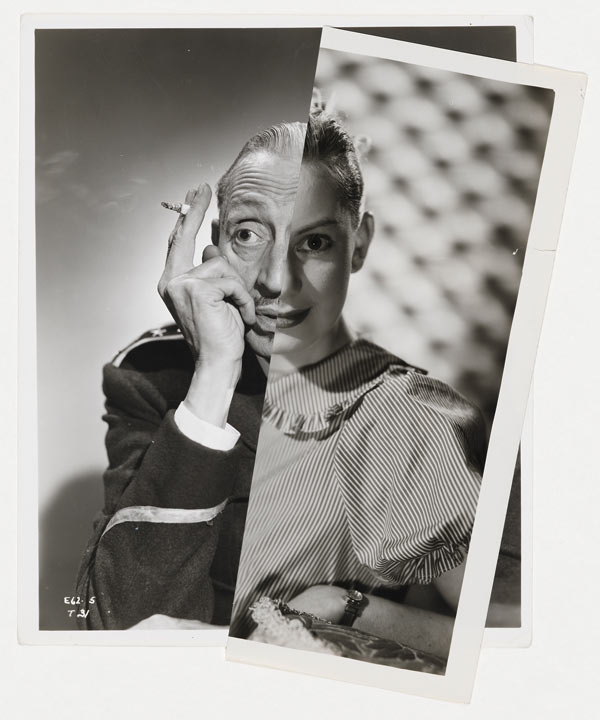
A detail from Muse (Film Portrait Collage) XVIII (2012) by John Stezaker, shortlisted for the Deutsche Börse photography prize. Click for full picture. Photograph: Alex Delfanne/Courtesy of the artist and The Approach, London

The South African photographer Pieter Hugo's images of the human and animal inhabitants of the Agbogbloshie, in Ghana's capital Accra, present a record of a dismal work and an appalling place. With its hellish fires and acres of dead computers, its wandering cattle and scavenging inhabitants, Agbogbloshie is a rubbish dump and reclamation site for defunct electronic goods. A girl in a tatty white dress and a bowl on her head poses amidst the smoking landscape. A cow sits before a broken keyboard. A young man, with a nest of scrabbly wiring on his head and an old tire over his shoulder, might almost be modelling a piece of mad millinery. It is all horribly photogenic. Well aware that many other photographers and writers have been here before him, Hugo still succumbs to the same photojournalistic cliches his work tries to escape.

The Deutsche Börse photography prize
  1. The Photographers' Gallery, London
  2. 13 July – 9 September 2012

However delicate her arrays of small images I feel much the same about the Japanese photographer Rinko Kawauchi's images, hung in clusters and groupings and runs of images. A web of crochet-work, a pallid spider, a full moon. Here are some tadpoles, and there they go again, wriggling their amphibian tails across a video screen inset in the wall among the still images. After the tadpoles, fireworks, exploding with that same wriggly rhythm. Some images are blown up big: light catching a motorcycle side-mirror, a tiny green frog sitting on someone's hand, a baby suckling at a breast. Wolfgang Tillmans, who uses similar methods of juxtaposition, scale jumps and leaps of subject matter, is better.

The American Christopher Williams shows just three largish photographs: a sumptuous, carefully composed shot of green and red developing trays in a photo-lab still life; a finger pressing a button on some kind of photographic flash machine; a tubular bale of hay in a field, shot in black and white. I'm as aware of the long intervals of white wall Williams has put between his images as I am of the pictures themselves. It all looks deeply meaningful, portentous and clever, but is somehow academic and feels dead. Maybe it's meant to.

John Stezaker's work is also photography about photography. He doesn't even take the photos himself. But Stezaker is by miles the best image-maker here. He has that great unteachable gift: an eye and a sensibility. Splicing old Hollywood publicity shots, marrying male and female faces, or – by an apparently simple act of gluing – sticking an old postcard over half a woman's face, he creates marvellous, funny, disturbing androgynies and what appear to be psychological crises in his subject's faces. No matter how long you look at them, Stezaker's hand-cut collaged images never lose their strange dynamism. A number of tiny, singular greyed details, cut from the incidental backgrounds of larger images in a 1920 compendium called Countries of the World, show single men and women walking and standing at kerbs and beside railings. A man and his shadow take a walk. Tiny figures cross a square. These miniscule details, smaller than stamps, ache with their frozen, fleeting human presences. Space and time collapse as you stare, nose to the glass. Another man stops and turns on a country road, as though disturbed by our looking. These people probably never knew that their passing had been recorded. Stezaker's 3rd Person Archive, this collection of hundreds of such image-fragments, is one of photography's great lost and found works, a major work masquerading as an archival curiosity. Photographer or not, he alone deserves the prize.

It sells out in days, is read in 45 countries and has been called the world's hippest interiors magazine.

Omar Sosa, left, and Nacho Alegre
Apartamento magazine's Omar Sosa, left, and Nacho Alegre

 Media news might be dominated by the decline of print, but Apartamento is quietly bucking the trend. Back in April, its founders, Nacho Alegre and Omar Sosa, celebrated as they sold all 25,000 copies of its ninth issue. The biannual, English-language publication was started in Barcelona from a tiny room in Alegre's house, yet now hits newsstands in China, Lebanon and Kenya, as well as recording big sales in Berlin, London and New York. One London shop reported selling 140 copies, compared to the 15 or so copies the rest of the magazines it stocks usually sell.

Unlike many traditional interiors magazines, which feature cold, minimalist rooms full of unaffordable designer gadgets, the living spaces in Apartamento are often small, cluttered and have a lived-in feel. The people covered are largely creative types – photographers, artists, musicians – who are invited to talk about their living spaces.

Apartamento magazineMedia news might be dominated by the decline of print sales, but for the past four years Apartamento has been quietly bucking the trend

These spaces are often rented, with family members, dirty laundry and used crockery all starring in photoshoots. Past features have included everything from tips for rooftop gardens and salad recipes to stories of nightmare roommates and a love letter fromChloë Sevigny to her New York apartment.

"It's not about design and products. We're not design fetishists," said Alegre. "The idea is about how people live in their homes and being able to tell their amazing stories. It's more like a diary."

Alegre and Sosa came up with the idea based partly on Alegre's experiences sleeping on friends' couches as he travelled across Europe as a photographer. It was originally planned to be a book before the pair hit upon the idea of an interiors magazine with a twist. The first issue, in April 2008, was funded entirely by the pair and quickly sold out its print run of 5,000. The money meant they could upscale in time for the third issue and recruit more people, such as Milan journalist Marco Velardi. There are currently seven full-time staff, aged between 24 and 32, and it has started to expand into a creative agency with footholds in New York and Milan as well as its HQ in Barcelona.

Apartamento's first issue featured cult filmmaker Mike Mills and indie band Mystery Jets, sourced through their network of work contacts and friends. Since then names as diverse as Swedish artist Carl Johan De Geer and former REM frontman Michael Stipe have featured, although even these are rarely contacted through traditional press avenues. "We're friends with Michael Stipe's boyfriend, who is a really good photographer," says Alegre. "You get a nice result that way, but it's not possible with everyone. We'd like to feature David Hockney but it's hard when you don't know anyone."

This naive approach gives the magazine much of its charm. Yet there are other reasons that account for its impressive sales figures. Apartamento does not run trade news and refuses to run articles that sell products for fear it will corrupt the spirit of the magazine. It charges a high cover price of €12 (£9.50), bucking the trend to go free and rely on advertising, which is minimal. Apartamento is also distributed directly to shops – concept stores and bookshops as well as newsstands – giving more control and a bigger slice of profits. Its chief operations officer, Victor Abellan, believes that the distribution network is in keeping with the magazine's ethos: "Speaking directly to stores gives us an emotional link between the reader, the retailer and the magazine."

. Rather, the whole thing has a strong human aspect, linking homes to the people who live in them rather than the items contained within. As designer Andy Beach says in issue seven: "A real living space is made from living, not decorating. A bored materialist can't understand that a house has to become a home."

Jeremy Leslie, magazine designer and founder of the blogmagculture.com, said Apartamento has several unique aspects. "Most of their articles lead with the name of the person rather than the solutions-based '10 ways to improve your storage' routine of other magazines," he says. He says its design has also helped it stand out, with high pagination and single columns of text lending it a bookish air. Its founders may not be "design fetishists", but Apartamento is held in high esteem in the design world – in 2010 it won the Yellow Pencil award for the best magazine.

Leslie's view that the decline of print does not mean that great magazine ideas can't take off is backed up by statistics such as an April study byDeloitte that found 88% of UK magazine readers still chose print as their preferred method of reading articles, with 35% subscribing to at least one printed magazine in 2011.

There are parallels with Apartamento's rise and how Vice magazineturned the style magazine on its head by targeting a different kind of reader to more traditional magazines. Although Alegre says Apartamento is not meant as a reaction to interior design magazines such as wallpaper*, it has clearly tapped into an area of home life and creativity previously under-served by such publications. Already there are plans to upscale Apartamento's circulation until it hits a "steady state" of 80,000 copies. However, Alegre is adamant that what is most important is retaining the magazine's spirit. . "It could get massive with us doing advertorials and running pieces about how nice companies are and how ecological their wood is," he said. "But we don't care about making lots of money from doing things the wrong way – we'd sooner not have to compromise."

series of hyper-realistic images entitled 'bodybuilder's world'. the personal project

belgian photographer kurt stallaert has conceived a series of hyper-realistic images entitled 'bodybuilder's world'. the personal project 
suggests an imaginary world with a literal 'powerful twist'. at first glance the subjects look ordinary in their daily surroundings, 
but on closer inspection they have been augmented to look like avid members of the professional fitness sport. the faces of the individuals, 
often those of children, are attached to the superhuman trunk of a bodybuilder generating a peculiar sense of curiosity, particularly 
within the everyday life setting. 


the faces of children are attached to those of bodybuilders


the subjects are often within an everyday life setting


artists have shown us how to look past the rain and see its beauty.

.
Rock stars … Jonathan Jones inspects the prehistoric ‘land art’ in Avebury. Photograph: Felix Clay for the Guardian

A giant rock rises up out of the field, a ragged, jagged colossus unmoved by the wind and driving rain. Further along the path looms another, then another, then another, all arranged in a curving line that vanishes behind a church tower and a barn. Meanwhile, on a patch of grass, two massive, lozenge-shaped stones stand tall in front of the Red Lion pub. Everywhere you look, in fact, there are eerie, unexplained slabs – jutting into what ought to be just another charming Wiltshire village.

The three stone circles of Avebury are a masterpiece of land art. That term is more often used to describe 20th-century works, the sort that reside in craters or sit by lakes in the American west. Yet when you look at, say, Robert Smithson's Spiral Jetty, the curling pier made of rocks and earth he built in Utah's Great Salt Lake in 1970, it is clearly inspired by the henges of prehistoric Britain. Avebury is one of the most haunting of these monuments. Although it was created 5,000 to 4,500 years ago, by people who left no writing of any kind to explain their intentions, it seems likely the stones and ditches that pepper Avebury had a religious purpose: they were meant to commemorate ancestors, to commune with the dead. As you walk around these immense, twisted stones, faces and agonised figures seem to rise to the surface.

Inside Kettle’s Yard gallery in Cambridge. Inside Kettle’s Yard gallery in Cambridge. Photograph: Paul Allitt

Modern artists in far-flung places have taken inspiration from Britain's prehistoric wonders for a good reason: Avebury's stone circles have shaped this landscape with a sublime and mysterious power that has endured down the ages. But what makes them art? And what makes them British? These are questions I'll be asking myself over the coming months, in a new series for guardian.co.uk: every day, I'll try to tell the story of British art, one image, object or structure at a time. And I've started by visiting Avebury, York Minster and Kettle's Yard gallery in Cambridge – all homes to great British art, from the prehistoric, medieval and modern periods.

What connects these places? Is there a common theme? British art really just means art made on these isles, but the moment you scratch at its "Britishness" you find multiculturalism is nothing new. From Avebury, I travelled north (and forwards a few thousand years) to York Minster, where some of the best-preserved stained glass in Britain creates a spectacle of colour that changes as daylight waxes and wanes. As I wandered through the hushed interior, sunlight struck one window, sending a stream of deep reds and blues across the stonework. It was a moment of pure ethereal beauty, a medieval light show that has lost none of its power.

York Minster's Five Sisters windowYork Minster's Five Sisters window

One tall window looked as if its images had melted away, damaged perhaps in one of the fires that have ravaged York Minster. But on closer inspection, the blue-grey glass of the towering Five Sisters Window is patterned in an elaborately geometric manner; it seems almost computer-generated. Surely these designs were influenced by the Islamic tiles British knights off on crusades in the east would have seen? This 13th-century window rejects figurative fuss in favour of pure mathematics and subtle, suggestive shades of colour. What, in theory, could be more British than York Minster? And yet the influence of Islam glows in its most impressive window.

The truth is that, for most of its history, British art was not self-consciously British at all. Islamic influences aside, the medieval art on these isles is deeply shaped by France, Europe's cultural leader in the middle ages. Before heading for Cambridge, I took a detour into the 18th century to explore the emergence of a more patriotic style. At Chatsworth House in Derbyshire hangs Thomas Gainsborough's Portrait of Georgiana, Duchess of Devonshire, her beauty caught in a rapidly painted swirl of hair and silks. This was once the most expensivepainting in the world, financier JP Morgan having paid $150,000 for it in 1901.

This is what many people mean by truly British art: a tremendous Gainsborough portrait of a posh person. It reflects the fact that, in the 18th century, some artists began to define themselves as British in style and attitude. The first to aggressively promote himself this way was William Hogarth, who mocks the scrawny French in his 1748 painting O the Roast Beef of Old England. In the art of Gainsborough, and even more so in the work of Constable and Turner in the Regency period, you can practically smell the countryside, hear the rain, taste the ale.

Critics have traditionally seen such paintings as the essence of British art. But, while I love these artists, their work is just one strand among many that have shaped our history. You only have to walk out of Chatsworth House into its gardens to see that. With its roaring cascade, its colossal rock garden and vistas sculpted by Capability Brown, this landscape is one vast art installation, as astonishing, in its way, as Avebury. Landscape gardens are the British aristocracy's great gift to the world of art, and self-consciously international in their influences. At Chatsworth, I sheltered from the rain in a temple created by a French designer in the early 1700s. I looked out on to a landscape peopled by statues of Greek gods. Not so Little Britain.

I don't think our country has some overarching national genius, some artistic gene passed down the cultural bloodline; but I do believe there is one thing uniquely British about the art that is made here. The simple geography of its creation has consequences: art has responded to, and has helped make, our landscape. A passion for the land of Britain, its jutting rocks and its soaring oaks, is what connects Avebury and Gainsborough.

My last stop ushered me back to modern times. Kettle's Yard was a ramshackle, falling-down cottage when the 20th-century art collector Jim Ede first came across it in the 1950s. He transformed it into a magical place that contains both a vision of art and a vision of Britain. As I picked my way around the gallery, the wan East Anglian light cast a silver-grey hue that suited the simply furnished rooms housing gently placed works by such modernists as Barbara Hepworth, Henry Moore and the French sculptor Henri Gaudier-Brzeska. Smoothly chiselled organic forms in white and black stone invite the mind to slow down and make connections.

This house near the river Cam is so infused with a love of the land, it seems to have sprung from the very landscape. Ede saw modern British art as a natural extension of its ancient rocks. His house is full of pebbles he collected, like some stone-age aesthete, for their beauty; images of Britain's stone age circles recur in the paintings on the walls. In one tangled dream picture, Vexilla Regis by the Welsh poet and artist David Jones, mystical enchantresses float through a wooded landscape that evokes the legends of King Arthur and the Mabinogion. Way off in the distance of this 1948 work, Jones has drawn a stone circle, a symbol of all the mystery and possibility that waits, silent, in the British landscape.

It takes me straight back to Avebury. As rainwater pooled in the crevices of its ancient stones, I contemplated the green landscape rolling away under the steel sky. This is where we live, I thought – and, down the ages, artists have shown us how to look past the rain and see its beauty.

05 July 2012

Freeze Fresh Herbs in Oil to Preserve Them

Have a few fresh herbs sitting around that you won't get to using before they turn? Sure, you can freeze them in water or dry them out, but if you know you'll use them relatively quickly, you can add a few weeks to their life without damaging their potency by freezing them in oil instead. We've shown you how to make simply syrups with them, and how to use sea salt to dry them, but if you have some lovely herbs you want to use, but won't get to before they turn brown, consider dropping them in an ice cube tray, filling up the cubes with olive oil (or any other oil of your choice, as long as it freezes nicely), and popping them in the freezer. When you're ready to fry some potatoes, for example, pop out a couple of rosemary oil cubes—you'll need the oil for the pan anyway, and the rosemary will be right at home. Need some oil in a baking dish or crock pot for a few chicken breasts? Grab a frozen sage oil cube. The sky's the limit. The only thing to note is that with some herbs have a shorter shelf life when frozen in oil than in water (like garlic, for example), so this won't beat drying if you're looking to keep your herbs fresh for months and months. It will, however, work for weeks on end, and if you freeze them, pop them out of the ice cube trays and put them into zippered baggies, they'll keep even longer. Then, the next time you need oil for a recipe, you can add a little fresh flavor at the same time. Hit the link below for even more oil-freezing tips, and some tips on which herbs take well to freezing and which don't.

03 July 2012

mclaren 12C spider convertible


'MP4-12C spider' by mclaren


mclaren automotive has produced its second 'MP4-12C' model, the '12C spider'. bred through the essence of a race car, the '12C spider' incorporates a 
convertible roof explicitly designed to let users experience the sounds of the vehicle's V8 twin turbo engine. unlike many other convertible models, 
the hard top roof can be operated whilst moving at speeds of up to 30 kph (20mph) taking less than 17 seconds to raise or lower. with the '12C' originally
designed as a convertible, its 75kg carbon fibre monocle frame required no additional strengthening for it to feature in the 'spider'. 


closing the hard-top


the raising of the roof frees 52 liters of space for storage. in 2013, vehicle lift will be available as an option, allowing for the '12C spider' to be raised 
in the front and rear for improved ground clearance, up to 40mm (1.5") at the front and 25mm (1") at the rear.

the MP4-12C will be launched in 'volcano red', one of 17 exterior paint finishes currently available for the '12C' and '12C spider'. 
first deliveries to customers are planned for november 2012. 


closed top


3/4 top view
 

3/4 rear view


top view


interior view

specifications: 

0-62 mph (0-100 kph) : 3.1 sec 
0-100 mph (0-161 kph) : 6.1 sec
0-124 mph (0-200 kph) : 9.0 sec
¼ mile (400m) : 10.8 sec at 134 mph (216 kph) 

engine configuration: V8 twin turbo, 7 speed automatic

star wars recreations of famous photographs


a photo series by david eger recreates famous photos and paintings with star wars figurines and handcrafted sets
above: 'troopers raising the flag on iwo jima' (joe rosenthal's 'raising the flag on iwo jima')
all images © david eger
as part of a year-long project '365 days of clones', canadian art teacher david eger has recreated famous photographs and paintings 
using star wars figurines. the scenography is done in real life rather than in photoshop, in a project that was eger's response to his 
new year's resolution to pursue personal photographic endeavours more often.

eger photographed each piece on a date relevant to the original work: the anniversary of the date the photograph was taken
in the case of most contemporary pieces; or the birth or death dates of the artist for images like his recreations of pablo picasso's
'guernica' or leonardo da vinci's 'vitruvian man'.


'troopers atop a skyscraper' (charles c. ebbets's 'lunchtime atop a skyscraper')


'abbey road' (ilan macmillan's 'abbey road' cover shot of the beatles)


'galactic gothic' (grant wood's 'american gothic')


'B.F. boba fett' (cover of film 'E.T. extra terrestrial'), with yoda in bicycle basket


'migrant trooper' (dorothea lange's 'migrant mother' great depression photograph of florence owens)


'a royal kiss' (recreation of the wedding day first kiss of prince william and catherine middleton at the buckingham palace)


'gandhi' (margaret bourke-white's portrait of gandhi spinning cotton)


'million trooper march' (bob adelman's photograph of martin luther king jr.)


eger's setup for the 'million trooper march' recreation


'the cloned kiss' (alfred eisenstaedt's 'the kiss')

A British photographer's adorable images of puppies, ducklings and even kittens in hammocks will brighten up any rainy day.

Master of cuteness Mark Taylor's images are in demand all over the world for the purr-fect way they capture a softer side to our best-loved animals.

His photographs are a legacy from his late mother Jane Burton who pioneered the style so familiar on calendars in offices and maths teacher classrooms everywhere.

Fosset the kitten with a yellow gosling: Photographer Mark Taylor is famous around the world for his cute shots of animals in unusual poses

Fosset the kitten with a yellow gosling: Photographer Mark Taylor is famous around the world for his cute shots of animals in unusual poses

Fosset cuddles up to his gosling friend: Mr Taylor's photographs are a legacy from his late mother Jane Burton who pioneered the style

Fosset cuddles up to his gosling friend: Mr Taylor's photographs are a legacy from his late mother Jane Burton who pioneered the style


Stanley the kitten with a duckling: Despite the menacing look in Stanley's eyes, Mr Taylor has never had any incidents where one subject ate another

Stanley the kitten with a duckling: Despite the menacing look in Stanley's eyes, Mr Taylor has never had any incidents where one subject ate another

Using a simple clean white background and some unusual animal pairings Mr Taylor's style has seen him make the cover of prestigious wildlife magazine National Geographic.

In this set of heart-warming images Mr Taylor shows why he's one of the best in his field tapping into that desire in us all to see something fluffy.


More...

  • Women cat owners are 'more likely to kill themselves' due to higher chance of infection with parasite found in feline faeces


From ducklings with puppies, to dogs with kittens and even rabbits Mark captures them all on camera as if they were the best and friends.

And thankfully so far he's had no case of any of them eating each other.

Hear me roar: Kittens Stanley and Fosset have a cuddle

Hear me roar: Kittens Stanley and Fosset have a cuddle


Guess who! Stanley holds his paws over Fosset's face as they play

Guess who! Stanley holds his paws over Fosset's face as they play


King of the castle: Stanley climbs on top of Fosset

King of the castle: Stanley climbs on top of Fosset


Not just for Christmas: Stanley and Fosset pose inside a gift box

Not just for Christmas: Stanley and Fosset pose inside a gift box

Touch: Stanley reaches out his paw for a fist bump
For me? Stanley poses with a flower

Touch on that: Stanley offers his paw for a fist bump. Right, he poses with a bright red flower


Oh you! Stanley gestures towards the camera as he lies in a hammock

Oh you! Stanley gestures towards the camera as he lies in a hammock


Time for a cat nap: Stanley and Fosset enjoy a snooze

Time for a cat nap: Stanley and Fosset enjoy a snooze

Keeping it in the family: Mr Taylor's daughter Siena, pictured with Stanley, helps to pose the animals for her father's photoshoots

Keeping it in the family: Mr Taylor's daughter Siena, pictured with Stanley, helps to pose the animals for her father's photo shoots

Mr Taylor, 47, creates his images all at his home studio Warren Photographic, in Guildford, Surrey.

His father Kim is a world-renowned wildlife photographer. His mother Jane, who died in 2007 after a brave battle against cancer, was one of the first to use a unique style now so well adopted by her son.

Mr Taylor, a father of one, said: 'There have been a few close shaves when we have put the different animals together, but we often "introduce" the animals to a rabbit in a cage first to gauge the reaction.

'If the dog starts licking its lips we know it might not work out well, and for example it's best not to put a Jack Russell next to a rabbit.

'I have helpers in the studio and some of the animals extras we have here, for example we have six rabbits, but others we have to bring in.

'The key to the photograph is making sure the animals are not doing anything they don't want to do because I think you can tell if they are not enjoying themselves.

'My mother was a pioneer if you like of this idea of using the clean white backgrounds and I like to think I am carrying on her legacy.'

You wanna start something? Stanley goes nose to nose with a Bichon Fris

You wanna start something? Stanley goes nose to nose with a Bichon Fris


My big mate: Stanley nuzzles up with Great Dane pup Tia

My big mate: Stanley nuzzles up with Great Dane pup Tia


Where u go? Stanley and Tia have a play

Where u go? Stanley and Tia have a play

Keeping it in the family Mr Taylor's daughter Siena, 10, is also on hand to pose up with the animals in the pictures.

Mr Taylor, who uses a Cannon 1DS Mark III camera, said that he felt his photographs were so popular because they tap into an desire in us all to relate to animals.

He said: 'I think the fascinating aspect of this type of photography is that it taps into something in us all that sees ourselves and human emotions in our pets and other animals.'


FEEDJIT Live Traffic Feed